Aller au contenu

Contemporary Humanism

International PhD Program & Research Network

  • A PROPOS
    • Qui sommes-nous
    • La convention
    • Le comite de direction et le conseil académique
    • Les doctorants
    • Les anciens doctorants
    • Comment candidater
    • Intranet
    • Nous contacter
  • EVENEMENTS
    • Seminaires annuels
    • Initiatives de recherche
  • PUBLICATIONS
  • BLOG
  • Français
    • Anglais
    • Italien
  • A PROPOS
    • Qui sommes-nous
    • La convention
    • Le comite de direction et le conseil académique
    • Les doctorants
    • Les anciens doctorants
    • Comment candidater
    • Intranet
    • Nous contacter
  • EVENEMENTS
    • Seminaires annuels
    • Initiatives de recherche
  • PUBLICATIONS
  • BLOG
  • Français
    • Anglais
    • Italien

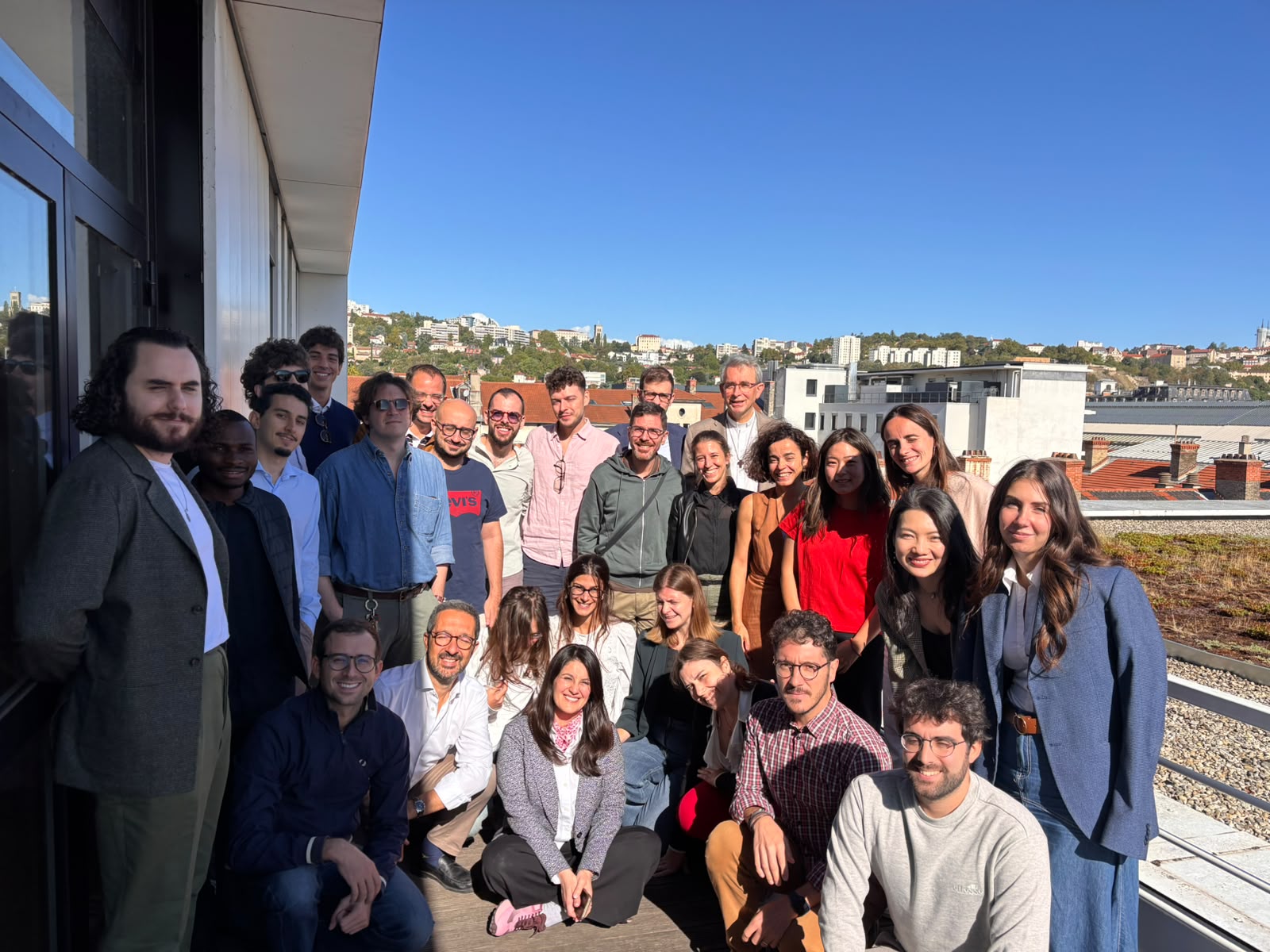
Le Séminaire de 2025 – Humanisme de l’Espérance


Téléchargez ici le poster, le programme detaillé, les résumés et les actes du colloque.


Greetings

Francesco Bonini, Rector of LUMSA University (Italy) (video)

Caterina Fiorilli, Head of Human Studies Department of LUMSA University (Italy) (video)


Introduction

Stefano Biancu, Coordinator of the PhD program “Contemporary Humanism”, LUMSA University (Italy) (video)


Keynote lectures (click on the title to watch the video)

Bishop Paul Tighe, Vatican Dicastery for Culture and Education (Vatican City State), Humanism of Hope in the Age of Artificial Intelligence

Emmanuel Falque, Institut Catholique de Paris (France), Survival and Creation

Robyn Horner, Australian Catholic University (Australia), What Can the Humanist Hope for?

Fernando Arancibia Collao, Pontificia Universidad Católica de Chile (Chile), Common Good and Social Welfare

Zaida Borges  Charepe, Universidade Católica Portuguesa (Portugual), Hope and Integral Health: Nurturing a Human-Centered Approach

Chiara Pesaresi, Unversité Catholique de Lyon (France), Hors d’attente. Rethinking Hope with Henri Maldiney


PhD Students’ Presentations (click on the title to watch the video)

  • Enrico di Meo, LUMSA-ICP: Imaginative Variation on Power: Ricœur’s Take on Utopia
  • Gianluca Michelli, LUMSA: The Non-Person. Benveniste and Ortigues on the Role of the Third Person
  • Tomaso Pignocchi, LUMSA-ICP: Language and Emptiness. Toward a Non-Foundational Soteriological Epistemology
  • Orlando Garcia, ICP-LUMSA: Hope and the Total Value of Human Existence
  • Jan Juhani Steinmann, ICP-LUMSA: Disquiet, Freedom and Hope. On the Dialectics of Possibility and Impossibility
  • Sarah Horton, ICP-ACU: Maine de Biran on the Limits of Science and the Self
  • Carlo Maria Simone, UCP-LUMSA: Hope Beyond the Apocalypse: An Ovidian Myth in the Road by Cormac McCarthy
  • Alessia Cadelo, LUMSA-UCP: The Multidimensional Concept of Autonomy and Hope
  • François Deshors, UCLy-LUMSA: Postmodernity and Disenchantment: Hope Confronted with the Illusion of Omniscience
    with the Development of Artificial Intelligence
  • Jèrèmie Supiot, UCLy-LUMSA: What is Constructivism?
  • Costanza Vizzani, LUMSA-PUC: Surrogacy in the Feminist Debate
  • Cecilia Benassi, LUMSA: Pavel Florensky and Hope between Poetry and Apocalypse
  • Flavia Chieffi, LUMSA-UCLy: Hope as a Figure of Human Historicity: Time and History in Virgilio Melchiorre’s Philosophy
  • Giuseppe Vena, LUMSA: Some Notes for a Genealogy of Confession: Foucault and the Christian Alethurgy
  • Lorenza Zucchi, UCLy-LUMSA: Invisibility and Passibility of Aesthetic Experience: Perspectives from Michel Henry and Henri Maldiney
  • Giammarco Basile, LUMSA-PUC: Flaminio Piccoli, the DC and the South America
  • Francesco Marcelli, LUMSA: Hope and Optimism among Italian Catholic University Students during the Post-War Period
  • Matteo Mostarda, LUMSA: Enrico Mattei’s Approach to International Relations
  • Riccardo Maria Sciarra, LUMSA: The Long Road to the EPP: A Historical Analysis of Christian Democratic Cooperation in Europe
  • Victoria Bauer, LUMSA-UCLy: Hope in Philosophical Posthumanism
  • Federico Rudari, UCP-LUMSA: Disorientation and Movement in Anne Imhof’s Natures Mortes
  • Marco Valerio, LUMSA-UCP: Challenges in Integrating Civic and Citizenship Education and Education for Sustainable Development in Initial Teacher Education for Pre-Primary and Primary Education: Preliminary Findings from Two Italian Case Studies
  • Giacomo Chironi, PhD, LUMSA: Between Forgiveness and Hope

Humanités numériques et innovations éducatives

Journée d’étude – 8 juin 2023 – MSH Paris Nord


Au cours des dernières années, les technologies numériques ont pénétré massivement les pratiques scolaires (Aillerie, 2017). La crise sanitaire vécue à l’échelle mondiale au début des années 2020 a contribué à accélérer ce phénomène. De l’école maternelle à l’université, les technologies sont aujourd’hui mises au service de la collaboration, de l’exploration ou du partage de connaissances, mais aussi du développement de pratiques hybrides ou à distance (Bihl, 2020 ; Trémion, 2019 ; Dagiral, 2011). Ce faisant, elles renouvellent des approches de la forme scolaire qui semblaient presque figées depuis Jean-Baptiste De La Salle, offrant notamment des opportunités pour mieux prendre en compte les besoins spécifiques ou particuliers des élèves (Barchechath, Magli & Winkin, 2016 ; Vincent, Courtebras & Reuter, 2012). Du côté de la recherche universitaire, ces technologies facilitent également l’analyse de corpus de données numériques et instrumentent l’enquête sur le terrain (Bourgatte & Jacobi, 2019 ; Sensevy, Kuster, Hélary & Lameul, 2005).

Ces pratiques numériques, souvent qualifiées d’innovantes, génèrent des attentes fortes de la part des institutions scolaires et universitaires (Cros, 2002). Les discours institutionnels et les curricula qui en découlent insistent sur la nécessité de l’acquisition d’une culture numérique minimale permettant de mettre en place des projets ou encore de repenser sa pédagogie. Pour autant, les usages scolaires et universitaires du numérique sont loin de faire consensus : des débats et des tensions demeurent. Ainsi, la technique peut aussi être envisagée comme un frein aux apprentissages. Sa maîtrise n’est pas toujours ni aisée ni neutre, elle ne répond pas toujours à des besoins réels, elle nécessite des investissements économiques ou pose des questions éthiques. Des controverses entourent également les usages éducatifs du numérique, quant à leur valeur ajoutée (est-elle significative ou seulement cosmétique ?) ou les conséquences possibles de leur usage intensif (baisse de l’attention et des capacités de concentration par exemple).

Plusieurs paradigmes scientifiques et éducatifs tentent d’apporter des réponses à ces questions. Parmi eux, celui des humanités numériques occupe une place particulière (Bourgatte & Tessier, 2022 ; Tessier, 2020 ; Morandi, 2017). Les humanités numériques ne constituent pas à proprement parler une discipline nouvelle, dotée d’une didactique propre, mais proposent plutôt un réagencement transdisciplinaire. ayant un impact sur la pratique des Lettres, Langues, Sciences Humaines et Sociales (LLSHS) (Bourgatte, Ferloni & Tessier, 2016). Les chercheur·e·s engagé·e·s dans ce mouvement tentent d’articuler pratiques innovantes et regard critique sur le numérique, de renouveler les formes de la recherche et de l’enseignement de leurs disciplines sans pour autant perdre de vue les objectifs fondamentaux des humanités (Berra, 2015 ; Doueihi, 2015). Elles posent, au sens fort, la question de la revitalisation du projet humaniste en évitant l’écueil d’un techno-enthousiasme naïf, mais aussi celui d’une diabolisation caricaturale du numérique. Elles soutiennent au contraire l’intégration des technologies dans l’espace de la recherche et de l’enseignement. Pour autant, les humanités numériques ne sont pas exemptes d’interrogations et de critiques : sont-elles adaptées à l’ensemble des parcours scolaires ou sont-elles réservées à l’enseignement supérieur et aux sciences humaines ? Constituent-elles une véritable rupture dans l’enseignement des LLSHS et une nouvelle manière d’introduire les technologies à l’école et l’université ou ne sont-elles qu’un nouveau prétexte pour la numérisation des enseignements ? (Blanc, 2017 ; Crouzier, 2015 ; Meunier, 2019 ; Tessier, 2020).

Cette journée d’étude, intitulée « Humanités numériques et innovations éducatives », sera consacrée à l’exploration des pratiques éducatives innovantes et à la place occupée par les enseignants et les éducateurs qui se saisissent de la perspective des humanités numériques dans ces nouveaux rapports aux savoirs. Favorisant les échanges interdisciplinaires, l’appel à communication s’adresse aux chercheur·e·s et aux doctorant·e·s en LLSHS travaillant sur les questions des humanités numériques et de l’innovation éducative. Ces questions pourront s’articuler autour de plusieurs thématiques :

  • Les Humanités numériques dans les curricula scolaires et universitaires
  • Innovations technologiques dans la formation initiale et continue
  • Évolutions contemporaines de la forme scolaire et technologies numériques
  • Culture numérique, innovations et inclusion
  • Perspectives et comparaisons internationales en humanités numériques
  • Approches critiques de l’innovation à l’école et à l’université
  • Etude et mobilisation des médias numériques à l’école et à l’université


Pour plus d’informations cliquez ici.

A Comment on « Fratelli tutti » 13-14 (Giuseppe Tognon)


The Encyclical Fratelli tutti is rich in suggestions. The text works on a “rhizomatic” basis, that corresponds to its inspiring principles, i.e. fraternity and social friendship. The ultimate goal of these principles is extending to all human beings the grace of a bond that projects the light of Salvation on human history. Pope Francis tells us that it’s only by going beyond genos and blood ties that we will be able to open doors to the Christian revolution. Doors will also open up to a form of paternity and maternity that engages all men of good will in the quest for justice and in the safeguard of creation. Blood and cultural ties are just the tools through which individuals and groups contribute to the species survival. Nonetheless, they do not exhaust the human “generating power” and, above all, they can’t be put forward as the bedrock of the Church, a spiritual community that lives inside history, precisely to guide it and also to witness that history itself will be ultimately overpassed.


Nevertheless, fraternity can be the new world frontier only if we start from the awareness that humanity is going through some hard times and if we are able to compare present and past. It is clear that every age had their difficulties. But the current period is characterized exactly by the refusal to look at models from the past, as it was always done before, for thousands of years. Our age rejects what a great Catholic historian, Henri-Irenée Marrou, called the “sadness” of the job of the historian, facing all the time human weaknesses and miseries. Globalization has masked identities that close off to defend what they are without understanding how and why they are that way. It makes many peoples captive of dictators and adventurers. It generates some absurd forms of inequality and injustice.


Against a naive use of the idea of fraternity, typical of simplistic revolutionary ideologies; and against an unscrupulous, phony use of democracy, the fraternity the Encyclical puts forth is founded on the historical consciousness that, not only religions, but also humanity itself, are at risk. Besides, those who seek fraternity are exactly the people who are not “naturally” siblings and know they are not. So, fraternity is a civil virtue that requires maturity and awareness, especially from those who have the possibility to judge and act without depending on despair. The practice of fraternity is a paramount challenge for the rich ones and the wise ones. A strong historical consciousness of personal and collective experience is the indispensable premise of a staunch practice of fraternity. Historical knowledge of the past teaches us that fraternity is always difficult, all the more so if we want to extend it to humankind. But historical consciousness suggests to us that the past will not influence the future, unless we allow it to last. Past and future are projections of men on time. They exist because they are filled with meanings that men share. Historians document the past and build up historical knowledge, but historical knowledge rises when people head to the future in light of a faith.


Originally published on Educa. International Catholic Journal of Education. Read here the rest of this article.

Menu
  • A PROPOS
    • QUI SOMMES-NOUS
    • La convention
    • Les anciens doctorants
    • Le comite de direction et le conseil academique
    • Comment candidater
    • Les doctorants
    • Nous contacter
  • EVENTS AND AGENDA
    • Seminaires annuels
      • Le séminaire annuel de 2020
      • Le séminaire annuel de 2019 à Paris
      • Le séminaire annuel de 2018 à Rome
    • Initiatives de recherche
  • PUBLICATIONS
    • Intranet
  • Blog
  • INTRANET
TAG
AI Annual Seminar artificial intelligence Cecilia Sabato Christophe Herzog Citizenship Covid-19 Democracy Dialogue Digital world education Emmanuel Levinas English English Environmental Care Espérance ethics Francesca Fioretti Français Fratelli tutti Fraternity Freedom Freedom George Steiner Gift Giuseppe Tognon History Humanism Humanisme Interreligious dialogue Jérôme de Gramont literature Love Marcel Mauss neurosciences Philosophie Philosophy Phénomenologie Religion Seminario Annuale Stefano Biancu Stefano Biancu Supererogation Séminaire Annuel Éthique

©2023 Contemporary Humanism ▸ P.iva IT01091891000 ▸ Privacy Policy

This website uses cookies to improve your experience. We'll assume you're ok with this, but you can opt-out if you wish. Privacy Policy - Cookie Policy Cookie settings REJECT ALL ACCEPT
Privacy & Cookies Policy

Privacy Overview

This website uses cookies to improve your experience while you navigate through the website. Out of these cookies, the cookies that are categorized as necessary are stored on your browser as they are essential for the working of basic functionalities of the website. We also use third-party cookies that help us analyze and understand how you use this website. These cookies will be stored in your browser only with your consent. You also have the option to opt-out of these cookies. But opting out of some of these cookies may have an effect on your browsing experience.
Necessary
Toujours activé
Necessary cookies are absolutely essential for the website to function properly. This category only includes cookies that ensures basic functionalities and security features of the website. These cookies do not store any personal information.
Non-necessary
Any cookies that may not be particularly necessary for the website to function and is used specifically to collect user personal data via analytics, ads, other embedded contents are termed as non-necessary cookies. It is mandatory to procure user consent prior to running these cookies on your website.
Enregistrer & appliquer
  • English
  • Italiano
  • Français